
14 European flights face bomb threats amid week of hoaxes
Eurocontrol tracks 14 targeted aircraft on Thursday, part of a surge of false alarms that has kept pilots and police on high alert across the continent.
By Rafael Delgado ·
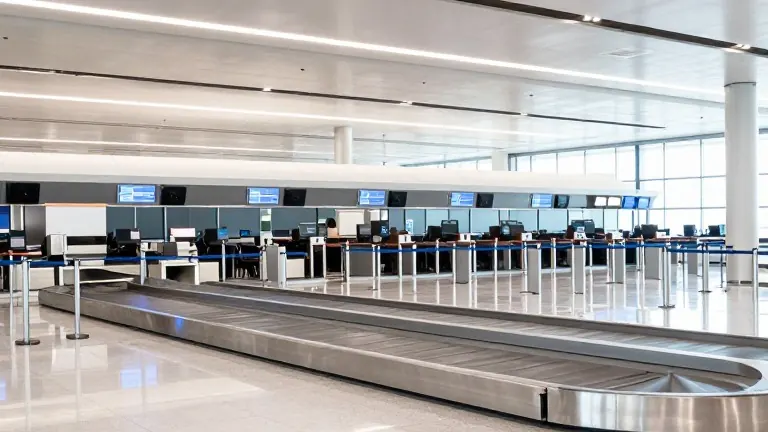
European aviation authorities reported that 14 flights faced bomb threats on Thursday, a sharp increase from the seven alerts logged on Tuesday. The threats forced diversions and inspections but resulted in no injuries and no suspicious items found. This spike follows a week of similar incidents that have unsettled air traffic across the continent.
The wave of threats began earlier this week, with more than two dozen flights affected. Authorities scrambled to rule out danger as planes were rerouted. The disruption coincides with other recent events, including attacks on supermarket refrigeration systems and drone incursions. These concurrent issues have heightened concerns among officials about the stability of European infrastructure.
On Friday, Hungarian defense minister Romulusz Ruszin-Szendi announced that military fighter jets escorted three passenger planes through the country's airspace. The aircraft, which originated in Brussels, Prague, and Romania, each received threats within an hour of one another. The flights were heading to Sofia, Cyprus, and Romania, respectively. The military response highlighted the immediate precautionary measures being taken.
In France, Prime Minister Sebastien Lecornu's office confirmed four new threats against aircraft flying over French territory on Friday. These planes landed safely at Paris' Orly Airport, where bomb disposal experts conducted inspections. The office did not specify which routes were affected, but the secure landing marked another instance of the standard protocol in action.
Other carriers also experienced disruptions. A Tarom flight from Prague to Bucharest and a Ryanair flight from Lisbon to Rome received threats. A WizzAir flight from Prague to Rome was diverted to Venice, where passengers were evacuated after landing. Security inspections at these locations found no explosives.
Eurocontrol, the European air traffic authority, stated it is monitoring the situation closely. The agency reported that the 14 threats on Thursday represented just 0.05% of the nearly 26,300 flights in the European network that day. It is working with airlines, airports, and navigation service providers to minimize any impact on air traffic flows.
At Prague's Vaclav Havel Airport, spokesperson Denisa Hejtmánková said nine flights were threatened, including arrivals from Denmark, Spain, and Britain. Departing flights to the Netherlands, Cyprus, Romania, Italy, and Britain were also on the list. Czech police noted that security measures had a minimal impact on normal operations. In Copenhagen, police visited the airport for a second consecutive day as a precaution, assessing that there was no danger to passengers.
Authorities have not identified a specific group behind the threats. An email sent to Rome airport authorities on Thursday claimed to be from an anti-feminist group targeting a feminist regime. Another airport received a threat with similar wording, though it is unclear if they came from the same sender. Paul Reuter, vice president of the European Cockpit Association, said crews are prepared to respond professionally by reviewing procedures and carrying extra fuel. He called the use of civil aviation for geopolitical disruption totally unacceptable.