Illinois joins 18 Democrats in governor races as wave hits
Democrats secured a majority of governorships in the 2026 midterms, with Illinois incumbent JB Pritzker winning re-election in a national landscape defined by open seats and battleground shifts.
By Talia Bennett ·
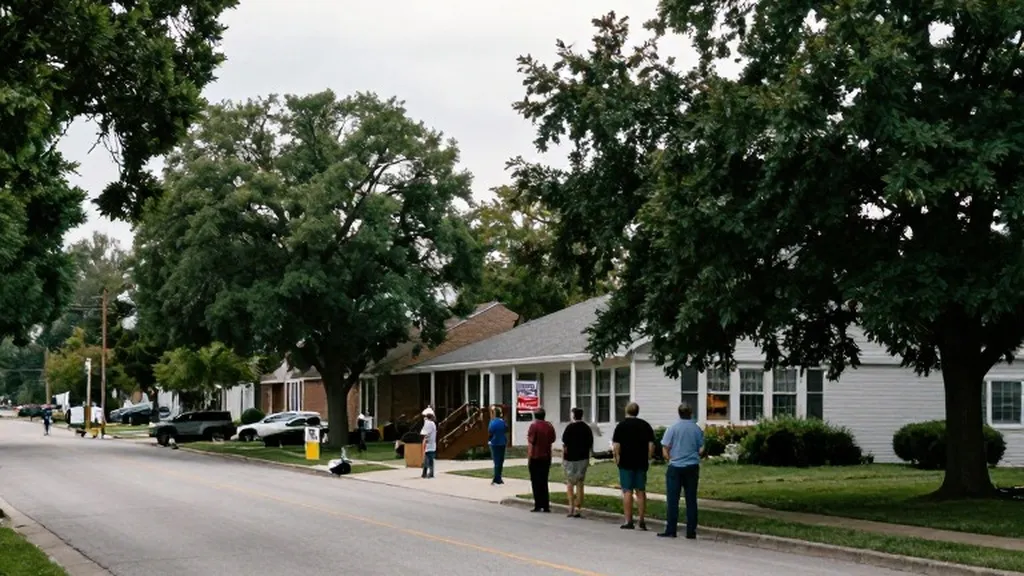
Voters in Lake County, including residents of Waukegan, Buffalo Grove, and Wheeling, cast their ballots Tuesday between 6 a.m. and 7 p.m. in the general election. The day concluded with a decisive shift in state power across the nation, as Democrats claimed a majority of governorships for the first time since the early 2010s. In Illinois, incumbent Governor JB Pritzker, a Democrat, won re-election, joining a broader coalition of Democratic executives who took office in a wave of midterms. The state’s U.S. Senate seat was also on the ballot, representing an open race with no incumbent running, while every U.S. House seat in the state was contested.
The national results reveal a complex landscape of the 36 governor races held this year. Of these, 18 were won by Democrats and 18 by Republicans, creating a perfect even split in the number of executive offices held by each party. This 18 to 18 division underscores a deeply divided executive map. However, the distribution of these wins was uneven across the political spectrum, with Democrats securing key victories in states that had previously leaned Republican. The even split suggests that while no single party dominated the governorship count, the specific states that changed hands will have significant implications for the next four years of state policy.
Nineteen of the governor seats were open positions, meaning the incumbent did not seek re-election. These open seats often serve as barometers for a party’s strength, as they lack the name recognition of a sitting leader. In these contests, challengers from both parties had to build their coalitions from scratch. The results in these open races contributed to the final 18 to 18 split. For example, in California, Xavier Becerra, a Democrat and former U.S. health and human services secretary, won the governor’s race. His victory continued a streak of five consecutive Catholic governors in the state, a fact that highlights the religious diversity within the Democratic base. Becerra’s win was supported by a significant portion of Catholic voters, particularly Latinos, who played a pivotal role in his campaign.
Nine of the governor races were identified as battlegrounds, where the margin of victory was tight and the outcome was uncertain until the final counts. These races often hinge on local issues and candidate-specific dynamics rather than broad partisan leanings. In these nine states, the competition was fierce, with both parties investing heavily in advertising and ground game. The results in these battlegrounds helped determine which party would hold the majority of governorships. Although the final count resulted in an even split, the nature of these close races indicates that the balance of power in statehouses is more fragile than in the past. The outcome in these states will likely shape the legislative agenda in the coming year.
The decision not to run for re-election by several incumbents opened the door for new faces to take office. In some cases, the absence of an incumbent allowed for a greater turnover in leadership. This dynamic was particularly evident in states where the sitting governor had served two terms or had announced their departure before the primary. The new governors who took office in these open seats bring fresh perspectives and priorities to their roles. In Illinois, while Pritzker ran for re-election, the open Senate seat presented a different challenge for voters. The Senate race in Illinois was a key federal contest, with candidates from both the Democratic and Republican parties vying for the position. The outcome of this race, along with the governor’s race, will define the state’s federal representation for the next term.
The national wave of Democratic gains extended beyond the governor’s office to include a majority of state legislative chambers. Democrats won a plurality of state government trifectas, where one party controls both the executive and legislative branches. This control allows for more cohesive policy implementation. The shift in state legislatures mirrors the federal results, where Democrats picked up at least 43 House seats and seven Senate seats. This net loss of seats for Republicans placed the election in the top 20% of election years in terms of seat swings against a president’s party. The combination of state and federal gains suggests a broad-based rejection of the current national leadership by voters across the country.
In California, the political landscape is particularly complex due to its large and diverse population. The state has elected five consecutive Catholic governors, a streak that underscores the deep roots of the faith in the region. David Gibson, the director of Fordham University's Center on Religion and Culture, noted that Catholicism is part of the fabric of California culture. This religious demographic influenced the outcome of the governor’s race, with Catholic voters supporting Xavier Becerra. The AP Voter Poll indicated that about two in 10 voters in the California governor’s race were Catholic, and the majority of them voted for the Democratic candidate. This pattern reflects the broader trend of religious voters aligning with candidates who share their values, even if those values do not always align neatly with partisan platforms.
The results of the 2026 midterms have set the stage for a new era of state governance. With Democrats holding a majority of governorships and a significant portion of state legislatures, the next four years will likely see a focus on issues such as education, healthcare, and economic development. The even split in the 36 governor races means that both parties will have a strong presence in the executive branch, creating opportunities for both cooperation and competition. The open seats and battleground races that defined this election cycle will continue to shape the political landscape as the new governors take office. In Illinois, the re-election of JB Pritzker and the outcome of the open Senate race will determine the state’s direction in the coming years.