Donnarumma Faces 10.56 Shots Per Game at Manchester City
A shift in tactical approach has forced the Italian keeper into a role that exposes his physical limitations, despite a 3-2 win in Leipzig.
By Robert Marshall ·
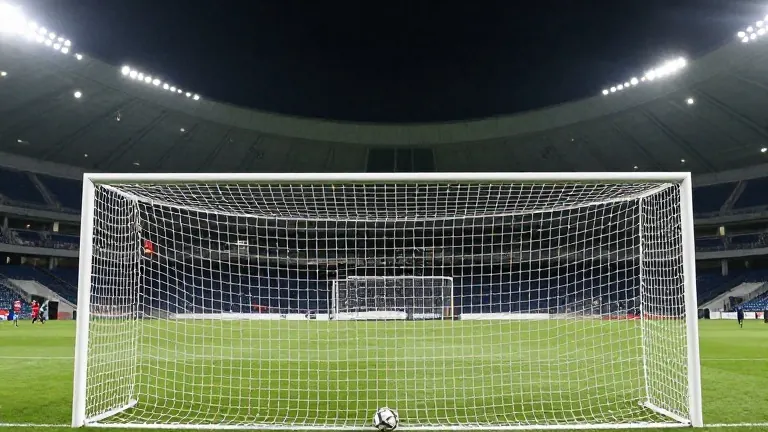
Manchester City defeated RB Leipzig 3-2 on November 5, a result that masked the ongoing struggle of their goalkeeper, Gianluigi Donnarumma. The Italian keeper, who signed last summer to replace Ederson, made errors that his teammates had to correct to secure the victory. Erling Haaland scored his 13th goal against the Bundesliga side in their ninth meeting, but the win relied on the outfield players covering for Donnarumma's misjudgments.
The tactical shift at City began in September 2024 when midfielder Rodri suffered an anterior cruciate ligament tear. Without Rodri, the team lost its ability to dominate possession and block counters. Consequently, the number of shots allowed per game rose sharply. The average was approximately 7.5 shots per game for the four seasons prior to the injury. That figure climbed to 9.34 in 2024-25 and 9.71 in 2025-26. Under manager Enzo Maresca, the Premier League average has reached 10.56 shots per game. In the Champions League, the figure stands at 11 shots per game.
Donnarumma was recruited specifically for his ability to save these high-volume attacks. His track record at Paris Saint-Germain, where he helped secure the club's first Champions League title, suggested he was the ideal candidate for this defensive role. However, his performance at City has revealed physical constraints. At 6 feet 5 inches, he possesses the height of a shot-stopper but lacks the lateral agility required to cover the expanding space behind the defense.
In the Leipzig match, Donnarumma drifted three yards off his line as Riedle Baku prepared to cross. Baku identified the gap and fired a precise shot for the equalizer. Donnarumma also struggled with Antonio Nusa's second equalizer. The shot came from a position with a 0.2 expected goals value, but its post-shot value reached 0.65 due to the pace of the strike. While Donnarumma made a diving save against Christoph Baumgartner earlier in the game, the errors were consistent with a pattern of slow reaction times.
The Italian keeper has played 56 games in the Premier League and Champions League for City. In that span, he has conceded six fewer goals than the expected goals value of the shots he faced. Last season, he ranked among the better pure shot-stoppers in the league. This season, his performance remains comparable to that baseline. The statistical profile shows a keeper who is functional but not elite in the specific context of City's current defensive load.
The club’s previous strategy relied on goalkeepers who could distribute the ball from their own third of the pitch. That model collapsed when the midfield pressure dropped. Now that Maresca has settled on a formation that allows more pressure on the goal, the requirement for the No. 1 position has inverted. The team needs a keeper who can keep the ball out, not one who can play it. Donnarumma is currently meeting the minimum requirements of that role, though he was signed to be the world's best at it.