Leaked UN document details route for Colombian fighters to Sudan
Investigators conclude the UAE moved troops through Somalia and Libya to support the Rapid Support Forces in the siege of el-Fasher.
By Talia Bennett ·
More than 500 days of siege ended last October when the Rapid Support Forces, known as the RSF, captured el-Fasher, the capital of North Darfur. A confidential report submitted to the United Nations Security Council last week confirms that Colombian mercenaries helped secure that victory. The document, obtained by Middle East Eye, states that investigators have established conclusively that the United Arab Emirates hired these fighters.
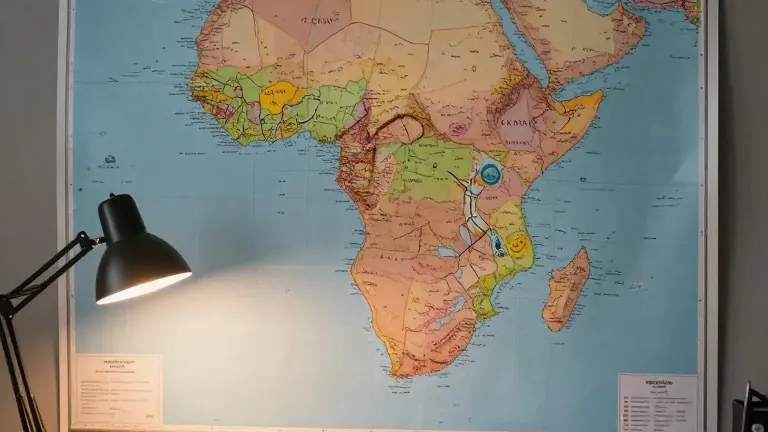
The report details a complex logistics network that moved the troops into Sudan. Global Security Services Group, a UAE-based company with close government ties, transported the Colombians through Libya, Somalia, and Chad. The investigators found that the Puntland Maritime Police Force base in Bosaso, Somalia, served as a transit and training site before the mercenaries deployed to the front lines. These routes passed through territory controlled by Emirati proxies, including areas in eastern Libya held by the Haftar family militias.
Training for the fighters took place in Abu Dhabi, Ghayathi, and al-Wathba within the UAE, as well as at the PMPF base in Bosaso. The report notes that the UAE military financed, trained, and supervised the PMPF. Once in Sudan, the mercenaries provided combat and technical support, including drone operation, artillery, and infantry assistance. They played a significant role in the military operations that led to the fall of el-Fasher. Eyewitnesses and victims reported that RSF fighters raped, executed, and extorted thousands of civilians during this period, while also setting up makeshift clinics to harvest blood from detainees.
The UAE has denied any wrongdoing in the conflict. In a letter included in the leaked report, the country rejected allegations related to the Sudan war and stated that it takes claims about mercenaries seriously. The Emirati foreign ministry did not respond to requests for comment. A previous annual report drafted earlier this year made similar assertions, but Bahrain, a close ally of the UAE, has blocked its publication for months. In September, the AI company Anthropic stated with high confidence that the UAE was behind an influence operation targeting UN experts and critics of its role in Sudan.
This evidence emerges as Lana Nusseibeh campaigns to become the next UN secretary-general. Nusseibeh, the UAE's former permanent representative to the UN, was born in Abu Dhabi into a prominent Palestinian family. She graduated from Cambridge University and Soas University of London. She served as the UAE's first female permanent representative to the UN from 2013 to 2024, a period that included her role in the 2020 normalization of relations between the UAE and Israel. Nusseibeh has denied that her nationality prevents her from being impartial on Sudan. She told Politico this week that she would support UN fact-finding mechanisms and that atrocities by the RSF must be subject to accountability.
Sudan's ambassador to the UK, Babiker al-Siddig al-Amin, criticized the candidacy. He said that Nusseibeh's bid should not be used to whitewash the UAE's support for the RSF. He stated that those with the blood of the Sudanese people on their hands should not lead international institutions. He warned that the UN's credibility would suffer a significant blow if Nusseibeh succeeds. The UN is scheduled to install a successor to Antonio Guterres by the end of the year.
Diplomatic sources indicate that the US, Russia, France, and the UK are leaning toward supporting Nusseibeh, while China is not in favor of her candidacy. The five permanent members of the Security Council all maintain strong economic and diplomatic ties with the UAE. US President Donald Trump has committed $1.4 trillion in investment to the US, including in artificial intelligence, and has called Abu Dhabi's ruler a warrior. France hosts a military base and a branch of the Louvre in Abu Dhabi. The UK has received billions of pounds in investment, and the country's prime minister, Andy Burnham, is the former mayor of Manchester, where the UAE vice president owns a major stake in the city and its football club.
David Miliband, head of the International Rescue Committee, has reportedly told his brother Ed, the British foreign secretary, that the UK should support Nusseibeh. The IRC denied taking a position on the candidates. A British government spokesperson said the priority is to find the best equipped candidate for the job. Nathaniel Raymond, executive director of Yale's Humanitarian Research Lab, has accused the British government of not calling out UAE support for the RSF. In April 2024, the UAE cancelled meetings with British ministers after a dispute over the UK's stance at a Security Council meeting on Sudan.