Midterm Politics: AI Moves From Productivity Pitch to Campaign Issue
Professors at Lehigh and Michigan describe a shift in how candidates discuss artificial intelligence as voters weigh regulation.
By Robert Marshall ·

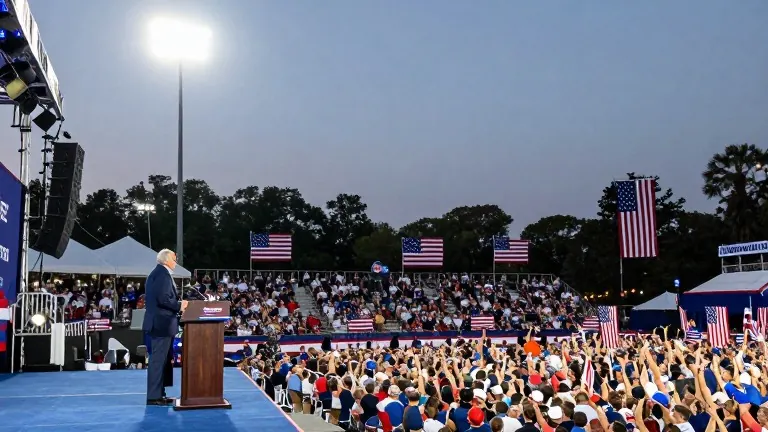
Candidates closing out the midterm campaign are fielding questions about artificial intelligence, a subject political scientists say has moved from a selling point to a point of friction. Chris Borick, a political science professor at Lehigh University, said AI became a major issue in several races over the last few months.
Borick contrasted the current debate with how politicians have treated new technology in the past. "We like tech traditionally as part of our political economy. That's really changed in the last year, where you see a much more neutral and sometimes negative political position on AI," he said. He said the political calculus has turned negative in both red and blue states, tracking public concern about AI's effects on society, the economy and local communities.
Candidates in both parties are talking about those concerns, but not in the same terms. Shobita Parthasarathy, a public policy professor at the University of Michigan, said Republicans have stayed closer to AI companies over the past year and steer toward cost questions. "They generally are not talking about the broader issues. They are trying to limit the discussion. They may or they may be less likely to talk about a moratorium," Parthasarathy said.
Borick said opposition to data centers and concern about AI can put conservatives, liberals, Republicans and Democrats on the same side at the local level. "And when that happens, you have the potential for some political realignments that we might be experiencing," he said.
A poll of Iowa and Ohio voters published online for SEMAFOR found the vast majority of voters want greater regulation of artificial intelligence.
Neither Borick nor Parthasarathy identified specific races, districts or candidates where AI is driving the discussion, and the source material does not specify the poll's sample size or dates.