
Midterm Shifts: Democrats seize control of Congress to challenge foreign policy
The new legislative majority in Washington aims to use funding controls to influence ongoing conflicts in Iran and Ukraine.
By Talia Bennett ·
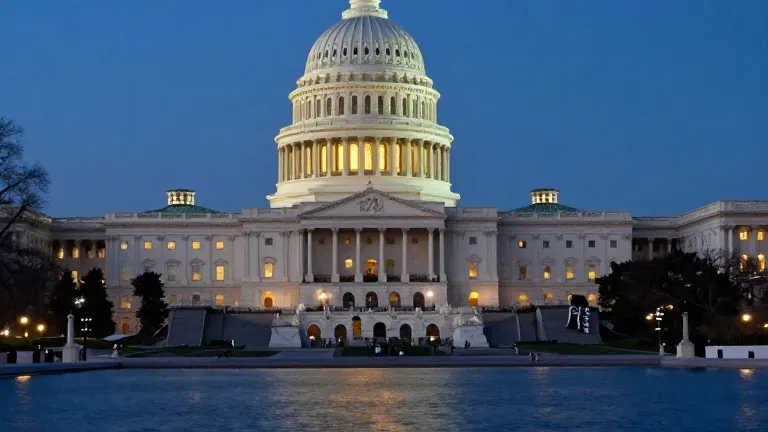
The 2026 midterm elections resulted in a decisive shift in power within the United States, with Democrats capturing control of both chambers of Congress. This outcome follows a period of intense public scrutiny regarding President Donald Trump’s foreign policy decisions, particularly the military engagement with Iran that began in February.
Republicans lost their majority in the House of Representatives and the Senate. In the 100-seat Senate, Democrats hold 54 seats against the Republican 44, with two seats yet to be determined. In the House, Democrats secured 242 seats, exceeding the 218 required for a majority, while Republicans hold 151. Governorships also shifted, with Democrats controlling 28 states and Republicans 20. These results marked several historic firsts, including the election of Abdul El-Sayed as the first Muslim senator, Keisha Lance Bottoms as the first Black female governor of Georgia, and Gina Hinojosa as the first Latina governor of Texas.
The conflict with Iran was a central issue for voters. The war has cost US taxpayers an estimated $47 billion and contributed to higher fuel prices due to the closure of the Strait of Hormuz. A Reuters/Ipsos poll conducted on the eve of the election showed that only 32 percent of respondents approved of Trump’s policies. Vice President JD Vance and other prominent Republicans have begun to distance themselves from the conflict. President Trump acknowledged the war’s role in the Republican losses but told reporters that he would make the same decision again to prevent Iran from acquiring nuclear weapons.
Senate Majority Leader Chuck Schumer stated that Democrats intend to use their control of the budget to end the war. He cited the power of the purse as a mechanism to deter a president who engages in conflict without congressional consent. However, experts noted that cutting funding while troops are deployed could be politically difficult. The War Powers Resolution, which requires military actions to end within 60 days unless Congress declares war, faces hurdles because a presidential veto requires a two-thirds majority to overcome, a threshold Democrats do not currently hold.
In Gaza, the election brought new progressive voices to Congress who have criticized Israel’s war and settler violence in the West Bank. Abdul El-Sayed, who defeated strong Republican and pro-Israel opposition in Michigan, pledged to push for the withdrawal of US aid to Israel. President Trump announced that Israeli Prime Minister Benjamin Netanyahu had suggested the US cease its $4 billion annual aid package. Trump stated that the US would stop paying by the end of the year but would assist Israel if necessary. Netanyahu’s office did not comment on the remark.
Support for Ukraine has become a priority for the new congressional majority. Trump, who promised to end the Russia-Ukraine war in days, has instead blamed Ukraine for rising diesel prices and suspended sanctions on Russian oil. He has called for President Volodymyr Zelenskyy to resign and suggested Ukraine concede territory to Russia. Ukraine has also accused the US of withholding intelligence and restricting access to Starlink satellite technology during recent missile strikes.
European leaders have expressed cautious optimism about the election results. They hope the new Congress will repair transatlantic relations and restore Washington’s support for Kyiv. President Zelenskyy told the German broadcaster ZDF that Democrats speak clearly about supporting Ukraine and renewing the connection between the United States and Europe. He said there is hope that a new balance of power will emerge and that Ukraine will receive increased support when the new Congress convenes in January.