
AI Stocks Rebound After Midterm Election Jitters
Nvidia leads a recovery in the S&P 500 as investors digest Democratic wins in statehouses and stronger-than-expected job reports.
By Robert Marshall ·
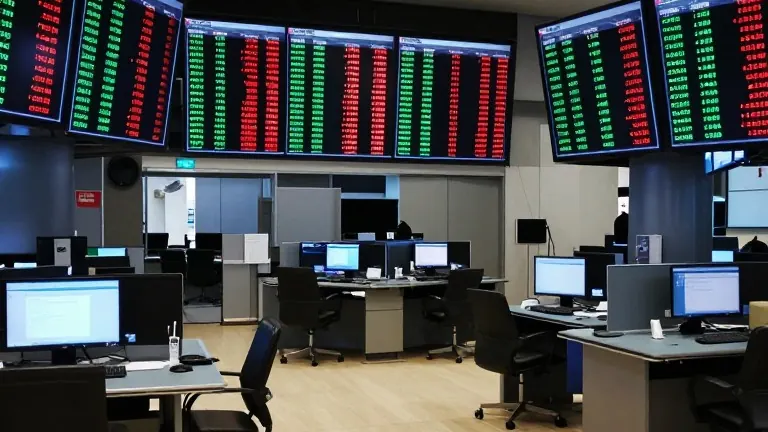
Wall Street attempted to stabilize on Friday after a volatile week driven by U.S. midterm election results and shifting economic data. The S&P 500 gained 0.3% to close at 7,376.86, capping a session where tech leaders helped offset losses in other sectors. This gain reduced the index's weekly decline to 2.7%, its worst performance since the market turbulence that followed President Donald Trump's tariff announcements in April 2025.
The Dow Jones Industrial Average fell 237.33 points, or 0.5%, to 51,285.73. The Nasdaq composite, which is heavily weighted toward technology stocks, rose 1.1% to add 264.43 points, ending at 24,579.42. The split performance reflects a market divided between traditional industrial concerns and the continued strength of artificial intelligence companies.
Nvidia, the chipmaker central to the AI infrastructure boom, rose 2.8% on Friday. This rebound followed steep drops of 9.3% and 3.2% on the previous two days. The stock's recovery helped lift other firms involved in building AI data centers. CoreWeave, a cloud provider for AI chips, gained 6.3%, while Micron Technology, a memory chip maker, climbed 5.1%.
Investors had worried this week that Democratic victories in state legislatures might slow down data center construction, particularly in Texas. Voters from various political backgrounds have expressed concern about rising power bills linked to energy-hungry AI facilities. These political concerns added to existing fears that high borrowing costs could dampen further expansion in the sector.
Corporate earnings provided additional support for the tech rally. IREN, which provides data centers and software for AI training, reported quarterly results that beat analyst estimates. Its stock jumped 20% following the announcement. The company also disclosed two new contracts signed after the quarter ended. Lam Research, a semiconductor equipment maker, rose 8.2% after unveiling a share buyback program of up to $25 billion.
Not all stocks in the S&P 500 moved higher. Axon Enterprise, the manufacturer of Taser devices, fell 18.2% after reporting weaker quarterly results than expected. The company also announced a $1.2 billion investment in Skydio, a drone technology firm. Charter Communications dropped 6.2% after the internet and video provider posted a quarterly loss, while analysts had anticipated a profit.
The broader U.S. market remained mixed, with more stocks in the S&P 500 declining than rising outside of the AI sector. Despite the weekly swings, the S&P 500 remains within 5.7% of its all-time high, which was established last month. The resilience of the index suggests that investors are still confident in the long-term growth potential of the technology sector despite short-term political and economic headwinds.
In the bond market, yields stabilized after earlier drops. The yield on the 10-year Treasury rose to 4.86% from 4.84% late Thursday. It had exceeded 5.30% last month amid concerns over inflation and government debt. A report released Friday showed U.S. employers hired more workers last month than economists predicted. This strong job growth signaled a healthy economy but also raised the likelihood that the Federal Reserve might hike interest rates at its December meeting, according to CME Group data.
Consumer sentiment showed mixed signals. The University of Michigan reported that sentiment improved among lower- and middle-wealth Americans but declined among those with large stock portfolios. Expectations for inflation over the coming year eased, a development that could help prevent a cycle where high inflation expectations drive further price increases.
More Business · Unethical Practices · Report a business · Got a Story?