
Democratic sweep revives clean energy stakes for US investors
A record 89 gigawatts of new capacity is on track for 2026 as political shifts reduce regulatory risk for wind and solar projects.
By Robert Marshall ·
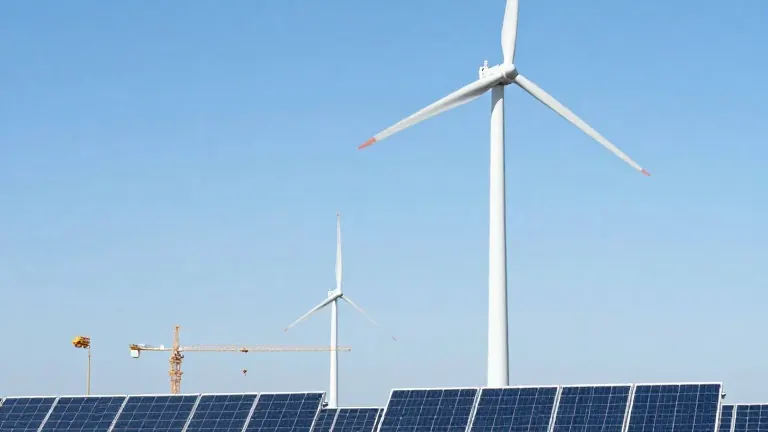
Investors in the renewable energy sector gained fresh confidence after Democrats secured control of both chambers of Congress in the November midterms. The election results removed a key source of policy uncertainty that had weighed on the industry since 2022. Clean energy and solar stocks rallied the day after the vote. Analysts at Barclays noted that the outcome reduces the risk of further political interference with incentives. This shift provides greater protection for the long-term economics of U.S. wind, solar, and battery storage investments.
The political landscape now presents a complex dynamic for legislative progress. President Trump retains the power to veto bills that restore subsidies or revive halted projects. However, some Republicans may support overriding the president to appeal to voters frustrated by high energy prices. This sentiment was visible in the passage of state initiatives aimed at limiting data center construction. A bipartisan permitting-reform bill currently awaits Senate approval. Progressive Democrats are pushing to delay the vote until the new Congress convenes in January. This delay would allow them to rewrite provisions that currently favor renewable projects over fossil fuel ventures.
Physical construction is accelerating despite policy headwinds. The U.S. is on pace to add a record 89 gigawatts of clean energy capacity by the end of 2026. BloombergNEF projects that installations will exceed this level in 2027. In the first half of 2026, 11.5 gigawatts of solar, 8.3 gigawatts of battery storage, and 6.3 gigawatts of wind power were installed. U.S. investment in clean energy and transportation reached $75 billion in the second quarter of 2026. That figure marked a 22% increase from the previous quarter and stands as the second-highest quarterly total on record.
Manufacturing capacity has expanded to meet this demand. By the third quarter of 2026, production capacity for solar modules, wind blades, and nacelles increased by roughly 50% compared to the first quarter of 2025. The Clean Investment Monitor reported that $277 billion was invested in renewable energy manufacturing and deployment over the past four quarters. Hannah Hess, director of energy and climate at Rhodium, attributed the strength in solar and storage to utility-scale needs and changing tax credit deadlines. The One Big Beautiful Bill Act hastened the sunsets for federal credits. Solar and wind projects had to begin construction by July 4 or be placed into service by December 31, 2027, to claim standard credits.
Financial data supports the momentum. GIIN’s 2026 survey found that 56% of impact investors have funds in clean energy. An additional 25% plan to increase those investments over the next five years. Justina Lai, chief impact officer at LNW, stated that renewables are the lowest cost form of new-build generation even without subsidies. LNW holds about $3.5 billion of its $12.1 billion assets under management in impact strategies. She cited growing electricity demand, aging grid infrastructure, and the need for energy storage as key drivers for clean energy investing.
The sector is also navigating the influence of AI data centers. Voters in 10 states approved 40 of 41 local initiatives restricting new data center construction or energy use. Governor-elect Gina Hinojosa of Texas said the state will pause data center expansion until protections are in place. Despite these local restrictions, Goldman Sachs forecast data center power demand to grow 38% in 2026 and 38% in 2027. OpenAI’s CFO told CNBC the company will not change its investment plans. White House economic advisor Kevin Hassett said that data centers scheduled for the next couple of years are not affected by the ballot initiatives.
Investors see the data center boom as a potential catalyst for renewables. Lai noted that clients are motivated to ensure new electricity demand is met by clean sources rather than fossil fuels. Roraj Pradhananga, chief investment officer at Veris Wealth Partners, said the long-term view on clean energy remains unchanged despite the reduction in the Inflation Reduction Act. Veris manages $3 billion across asset classes. Pradhananga stated that climate solutions are the largest allocation for the firm’s clients. The firm recently allocated to strategies from GPs including Closed Loop Partners and New Energy Capital.
More Business · Unethical Practices · Report a business · Got a Story?