
Jeffrey Reed uses AI to decode wolf howls
The computational linguist co-founded a bioacoustics project to separate wolf signals from background noise.
By Talia Bennett ·
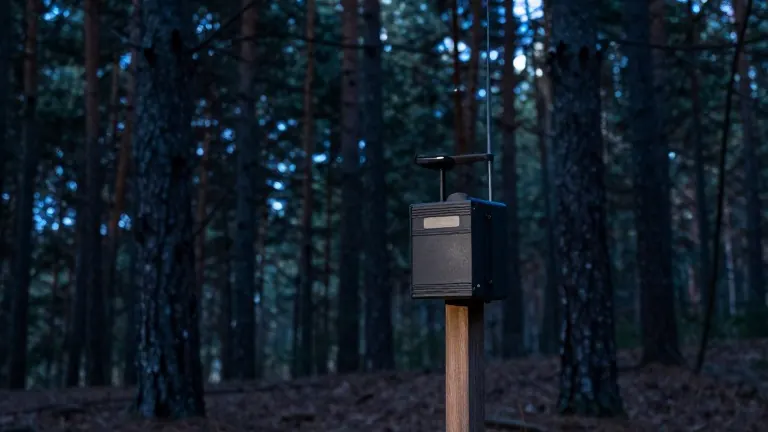
Jeffrey Reed has spent three decades in Silicon Valley building machines that replicate human language. He is now applying that experience to the sounds of wild wolves. Reed holds a Ph.D. in ancient languages and moved back to the outskirts of Yellowstone National Park a few years ago. He began using artificial intelligence and bioacoustics to record and interpret wolf vocalizations in the wild.
Reed co-founded The Cry Wolf Project, which is currently the world's largest bioacoustics study of wild wolves. The project aims to isolate specific signals from the surrounding noise. Reed also co-founded Grizzly Systems, a company that creates the technology required for monitoring wildlife. These two ventures work together to capture and analyze audio data from the field.
Reed is using AI to help separate the signal from the noise. This process allows researchers to start decoding what each howl means. The technology helps filter out background sounds so that specific wolf communications can be studied. This approach combines Reed's background in language with modern computational tools.
A book on wolf communication is forthcoming from Little, Brown and Company. The segment about Reed's work was part of a TED Radio Hour episode titled Can curiosity save the wild? The episode was produced by Phoebe Lett and edited by Sanaz Meshkinpour. The show is distributed by NPR.
Reed's work builds on related research in animal communication. A related TED talk explores learning to talk to sperm whales. Another talk discusses how to imitate nature's voices. These topics fall under the broader category of biodiversity research. The current project focuses specifically on the acoustic patterns of wolves in their natural habitat.
The data collection process involves recording sounds in the wild. Reed uses the hardware from Grizzly Systems to capture these recordings. The software then analyzes the audio files. This system helps researchers understand the complexity of wolf social structures. The project continues to gather data for further analysis.