Kristallnacht Remembrance: 1,000 Synagogues Keep Lights On
The 88th anniversary of the 1938 pogrom will be marked by the 'Spread the Light' initiative, which invites Jewish institutions globally to remain illuminated overnight.
By Rafael Delgado ·
November 9, 1938, marked the beginning of the Nazi pogrom known as Kristallnacht. On that night, Jewish homes, businesses, and institutions across Germany and Austria came under attack. Hundreds of Jews were killed, and thousands were sent to concentration camps. Historians identify this event as a precursor to the Holocaust. The 88th anniversary of that night will be observed on Monday.
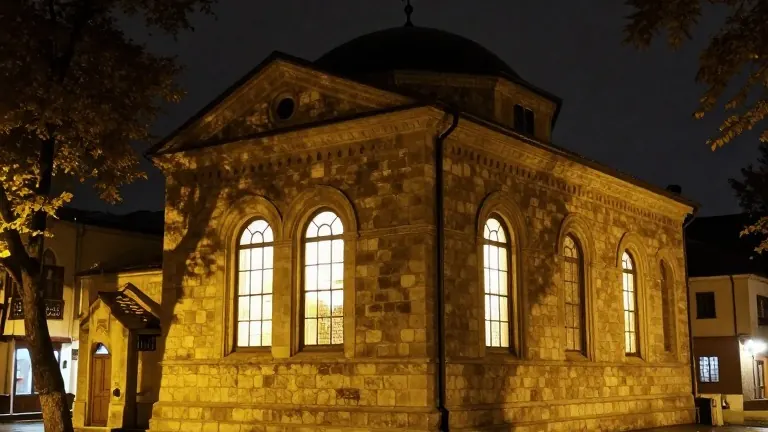
More than 1,000 synagogues and Jewish institutions worldwide are expected to keep their lights burning overnight Monday. This participation is part of the annual 'Spread the Light' campaign. The initiative is an ongoing effort coordinated by the organization Or Dolek. It is jointly led by the Religious Kibbutz Movement and Yad Vashem. The goal is to commemorate the 1938 attacks through visibility.
Dalia Yohanan coordinates the project through Or Dolek. She confirmed that at least 1,000 institutions participated last year. The exact number for this year is not yet finalized. Yohanan stated that the night of Kristallnacht represented a clear turning point for the Nazis. She noted that after the pogrom, they believed they could act with impunity while the world remained silent.
Participants are encouraged to photograph their illuminated buildings. They are asked to share these images on social media using the hashtag #SpreadtheLight. The visual display serves as a communal marker of the date. The campaign relies on digital sharing to expand its reach beyond the physical location of each synagogue.
The initiative originated in 2008. It was launched by Rabbi Yechiel Wasserman, head of the Center for Religious Affairs in the Diaspora in the World Zionist Organization. The 2008 launch coincided with the 70th anniversary of Kristallnacht. Yohanan described the early project as small and lacking in publicity. She said the original organizers were not planning to continue, so she took over the coordination duties.
Yohanan's connection to the event is personal. Her father, Naftali (Kurt) Wertheim, survived Kristallnacht as a boy. He hid under a table while neighbors threw stones at his family's windows. Shortly after the pogrom, his parents sent him on a Kindertransport rescue to Britain. This action saved his life, while his parents were killed by the Nazis. Wertheim later settled in Israel and joined the kibbutz movement.
Yohanan recalled her father's reaction when the project first began. He was overwhelmed by the sight of synagogues with their lights on. He described it as a beautiful sight to see the synagogue lights burning all night long. The emotional impact of the visual remembrance remains central to the campaign's narrative.
The anniversary is framed as a time to celebrate the strengthening of Jewish identity. Yohanan noted that this occurs in a post-October 7 world characterized by fear and growing antisemitism. She emphasized that the focus of this day is on learning rather than mourning. This distinguishes the observance from other Holocaust memorial days.
Yohanan addressed the fear some communities feel about visibility. She said many are afraid to shine their light externally for fear of being seen. The campaign serves as a way to strengthen communities around the world. It conveys the message that the Jewish people are with one another. The lights on Monday night will serve as that public declaration.