Spring Snow Falls in NSW, Victoria, and Tasmania as Cold Front Arrives
Apparent temperatures in southern capital cities dropped below 13 degrees Celsius on Saturday, with some areas recording hail and snowfall.
By Talia Bennett ·
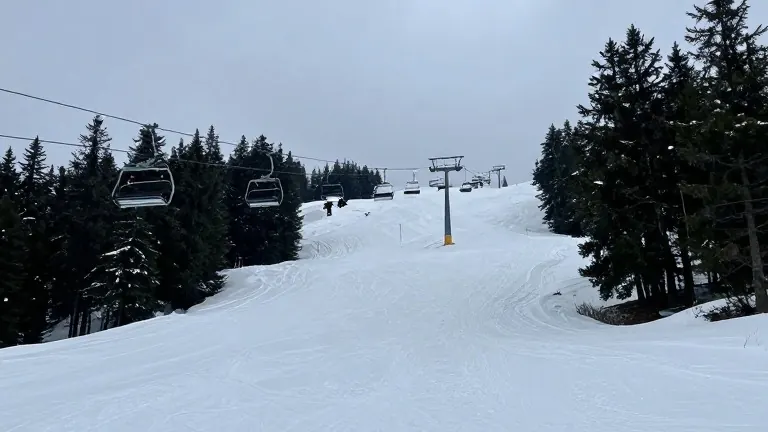
Snow fell across parts of New South Wales, Victoria, and Tasmania on Saturday and Sunday due to an unseasonal cold front.
The Bureau of Meteorology forecast the drop in temperatures, noting that the weather system pushed cold air north from Antarctica. This shift caused apparent temperatures to fall well below forecast maximums. South-westerly winds further lowered the feels-like temperature in the region.
Snow accumulated at Thredbo, Perisher, and Mount Hotham. It also fell on Kunanyi/Mount Wellington in Hobart. The Bureau of Meteorology stated that while the event is uncommon, it is not unheard of. Several of these locations recorded snowfall during a similar event in November 2022.
Residents reacted to the early winter conditions on social media. Madeleine McVie, a retail manager at Thredbo, posted on Instagram on Saturday afternoon. She wrote, “You will not believe this, it’s springtime in Australia, in November, and it’s snowing.” She added, “Like, not just a little bit. It’s fully snowing.” On Sunday morning, McVie shared a video of riding empty chairlifts through the park while the snow continued to fall. The Kingston Crows cricket club in Tasmania shared an image of the Kingston Beach Oval covered in hailstones.
At midday on Saturday, Adelaide, Melbourne, Hobart, Canberra, and Sydney all felt cooler than 13 degrees Celsius. Adelaide recorded the highest temperature of the group at 17.5 degrees Celsius, though it felt like 12.3 degrees. Canberra was the coldest, with a maximum of 12.9 degrees Celsius and a feels-like temperature of 5.3 degrees. In contrast, Brisbane, Perth, and Darwin enjoyed temperatures in the 20s or 30s.
Warmer weather is expected to return on Monday. All capital cities are forecast to reach at least 20 degrees Celsius by Tuesday. The Bureau of Meteorology, the United Nations, and other bodies have warned of the potential effects of a supercharged El Niño. This phenomenon is expected to make the southern hemisphere summer hotter and drier, increasing the risk of wildfires and droughts in Australia and southern Africa.