
Turkey Vows $500 Billion Energy Overhaul Before Hosting Climate Summit
Energy Minister Alparslan Bayraktar unveiled a 2040 plan to quadruple renewable output and shift 36% of the economy to electric power, with leaders gathering in Antalya next week.
By Talia Bennett ·
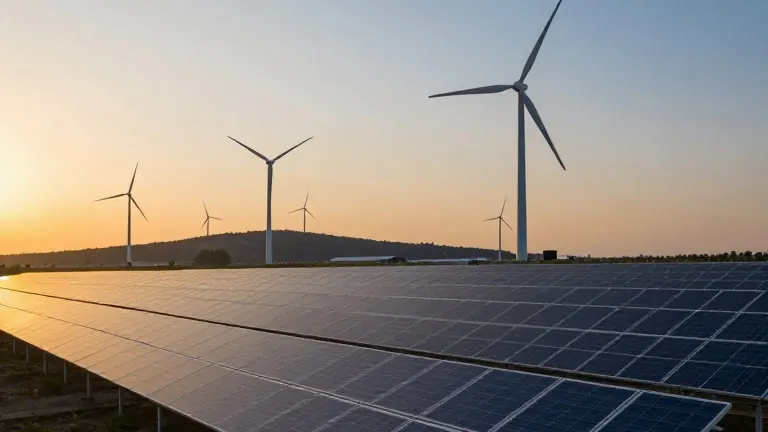
Turkish Energy Minister Alparslan Bayraktar outlined a sweeping national strategy on Friday to reduce the country’s reliance on coal and fossil fuels. The announcement comes as world leaders prepare to arrive in the Mediterranean city of Antalya next week for the COP31 climate change summit. Turkey’s role as host has intensified scrutiny on its energy sector, which currently generates 33% of its power from coal, according to the Turkish Energy Ministry.
Bayraktar presented the National Energy Plan 2040 in Istanbul, describing a goal to transition the economy through electrification. The plan targets a 40% reduction in emissions by 2040 and a net zero status by 2053. He stated that solar and wind energy contributions to electricity generation would more than quadruple over the next 13 years, rising from nearly 23% to a larger share of the grid.
The minister emphasized that the plan aims for 36% electrification of the economy by 2040. To illustrate the scale of this shift, he cited the transport sector, projecting that the number of electric vehicles on Turkish roads would surge from approximately 500,000 to 20 million within the same period. Bayraktar described this as a necessary paradigm shift in how the nation consumes energy.
Achieving these targets requires substantial financial commitment. Bayraktar stated that the transition will demand $500 billion in investment over the next 13 years. He indicated that about $210 billion would come from Turkish public sector companies, with the remainder sought from foreign investors. He urged the global community to find the necessary funds, arguing that everyone must take responsibility for financing the fight against climate change.
The minister acknowledged the social challenges of moving away from coal, which employs 30,000 to 40,000 people in mining and power generation. He called for a just transition period to support these workers as they move to new roles, while noting that coal will remain necessary for energy security. Turkey also plans to double its natural gas production to 7.5 billion cubic meters annually after starting to drill reserves in the Black Sea.
Nuclear power represents another pillar of the strategy. The Akkuyu nuclear plant on the Mediterranean coast is nearing operation, and plans are underway for a second station by the Black Sea. Bayraktar linked these projects to Turkey’s goal of becoming energy independent by 2040. He noted that sanctions related to the wars in Ukraine and Iran continue to complicate global energy markets and the push for carbon neutrality.
The Climate Action Tracker currently rates Turkey’s climate policies as critically insufficient against the goals of the 2015 Paris Agreement, which aims to limit global warming to 1.5 degrees Celsius. Bayraktar said his primary message at COP31 will be for nations to adopt responsive and realistic policies to meet carbon neutrality targets.