France Protests Draw 320,000 Before Evening Clashes
Interior ministry counts show participation fell from 410,000 the prior weekend as police used teargas and stun grenades in several cities after dark.
By Talia Bennett ·
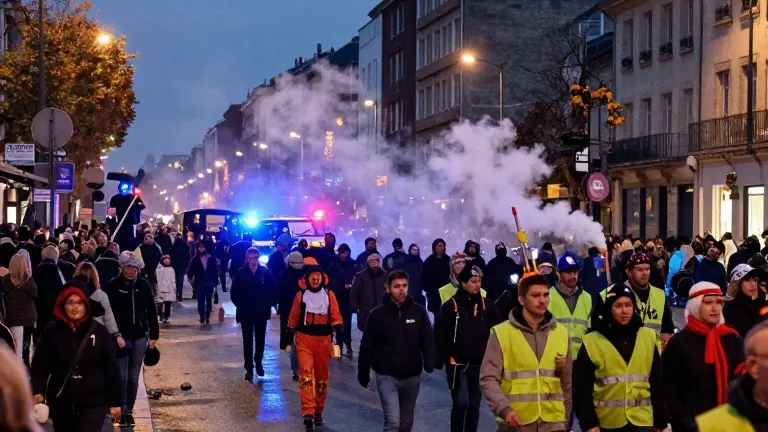
About 320,000 people marched in French cities on Saturday, October 31, the interior ministry said, down from an estimated 410,000 the previous weekend. The interior ministry counted 70,000 in Paris, where the procession moved along boulevards on the south-eastern outskirts and bypassed the city centre.
The third wave of demonstrations over living costs and public services began peacefully. Marchers left the Porte de Bagnolet near the ring road under a police helicopter, carrying placards that read "No need for teargas to make our future look bleak" and "Disguised as an angry citizen for Halloween."
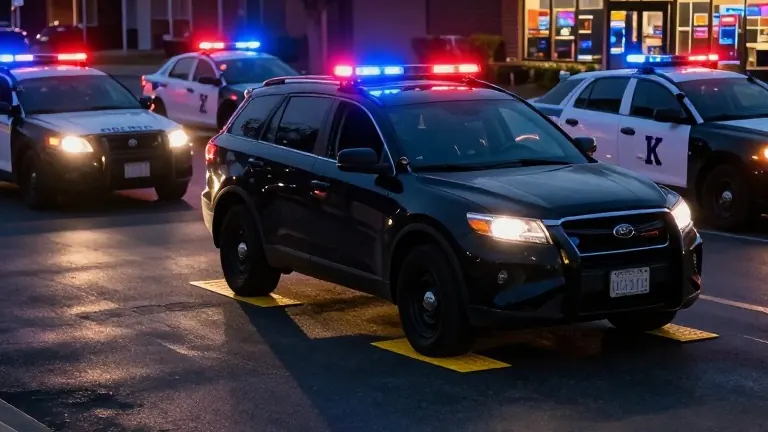
As evening fell, the tone shifted near the destination at Porte de Charenton. Dozens of people in black clothing and masks used hammers to lift paving stones and threw them at police, and at least one incendiary device was thrown at security forces, French media reported. The Paris police prefecture said "a hardcore of several hundred rioters" was throwing projectiles that included a molotov cocktail, and that officers were "manoeuvring to restore public order." Police answered with teargas and baton charges.
Clashes were not limited to Paris. In Lyon, protesters threw projectiles and officers fired teargas. In Toulouse, police used water cannon on an unauthorised march that drew several thousand people, most of them young. Interior Minister Laurent Nuñez had said earlier in the week that 70,000 police and gendarmes, including elite units, would deploy to contain violence on the sidelines, and he called Saturday "a very high risk" day.
The Paris march drew school students, trade unions and gilets jaune protesters. Jérôme Rodrigues, a protester on the Paris route, said: "The French economy is doing badly no matter what happens, because today we're being run by a group of incompetents who juggle billions while families are struggling with a few cents. That's why we're here, to keep shouting our demands louder and louder." In Nantes, Camille Guérin said: "We say no to the cost of living, no to the far right, yes to high school students' demands, yes to giving citizens a voice."
The route followed two weeks after the first wave of mass protest on October 17, which brought street violence and looting to numerous French cities and became one of the worst days of civil unrest in the country's recent history. A second wave of rallies took place the following Saturday.
Sabrine Kharbach of the Union Étudiante said students plan new high school and university blockades on Tuesday and Thursday. "Then we will join the 5 November demonstration called by workers and trade unions," Kharbach said.
Protests ran alongside actions elsewhere in Germany, where police used water cannon to end youth-led marches organised by the group "Gen Z regelt!" In Cologne, officers turned hoses on a crowd after protesters fired fireworks at police. A march in Frankfurt was paused after fireworks went off. Bild reported that police used pepper spray on demonstrators in some places, that bottles and eggs were thrown in Berlin, and that barricades burned in Hamburg. Police were also on alert in Barcelona after an anonymous TikTok network called Blocus urged new gatherings, and in Italy after recent clashes in Milan, Turin and Bologna.