Three-Minute Heist at Parma Museum Sparks Alarm Across Europe
Thieves lifted nine million euros in art from a small Italian foundation, prompting a review of security protocols in thousands of regional institutions.
By Talia Bennett ·
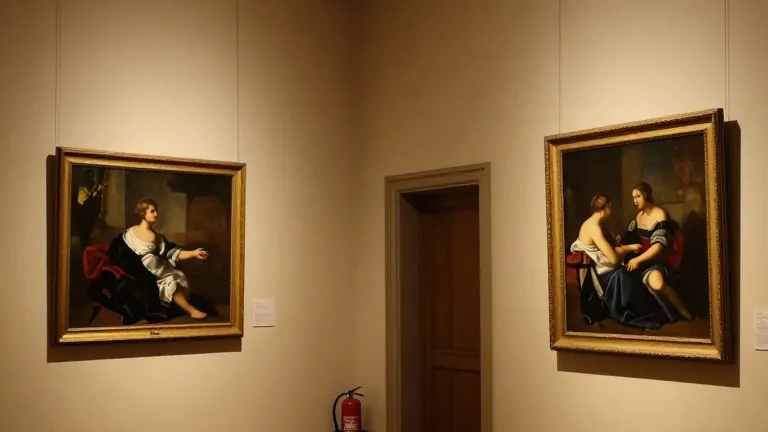
In just three minutes, two intruders removed paintings by Cézanne, Renoir, and Matisse from the walls of the Fondazione Magnani Rocca near Parma. The works, valued at approximately nine million euros, were passed to an accompice who fled through a forced window on the night of March 22. A fourth man at the main gate discharged a fire extinguisher to distract the custodian when the alarm sounded.
The quick operation has fueled anxiety among curators and security experts who view the incident as a symptom of a wider trend. Since a major heist at the Louvre in Paris last year, a series of thefts has struck museums in France, Italy, and Spain. Marc Balcells, a researcher in Barcelona specializing in crimes against cultural heritage, describes this as the "Louvre effect." He argues that if a world-famous institution could be compromised so easily, smaller museums in rural areas are even more vulnerable.
The wave of crime includes the disappearance of works by Antonello da Messina from a museum in Sicily in August and the theft of two Renoirs from Cagnes-sur-Mer in September. In Spain, thieves took historic gold coins from museums in Badajoz and Albacete, along with a Bronze Age treasure from Villena. These incidents have exposed gaps in protection for smaller institutions that lack the resources of national monuments.
Data suggests the vulnerability is systemic. A 2024 survey by France's Culture Ministry found that only one in four cultural institutions had an emergency and risk-prevention plan, while nearly half lacked video surveillance. A May parliamentary report in France echoed these concerns, noting that museums often lack the necessary preparation to protect artifacts. In Italy, the challenge is compounded by the country's fragmented cultural history, which leaves valuable works scattered across hundreds of small towns.
Antonella Pinna, president of the Italian committee of the International Council of Museums, emphasized that technology alone is insufficient. She noted that the system is distinctive because works remain where they were created, but criminals must face greater difficulties. "If an alarm goes off, someone has to make sure it is checked," Pinna said. The council has worked with Italy's Culture Ministry and the Carabinieri on security guidelines since 2015, but implementation remains uneven.
The financial burden falls heavily on local authorities. Florence Imbert, a Paris-based security consultant, stated that 85% of small French museums are run by local governments with limited financial resources. "The budget is key to winning the war," she said. In response, France's Culture Ministry announced a 33-point security plan in July, backed by 30 million euros over three years. Despite these efforts, the Carabinieri art squad recorded 17 thefts from Italian museums and galleries in 2025, up from 14 in the previous year.
Europol reported in August that museum thefts are becoming more forceful, with a focus on precious metals and gemstones. However, famous paintings are difficult to sell openly. Pinna explained that stolen art is more likely to be hidden, used as leverage in ransom attempts, or sold privately. This complexity has led insurers to reassess risks. Filippo Guerrini-Maraldi of Howden Specialty said he has never seen art theft become such a major risk in his 40-year career.
The Parma paintings were recovered in August from a cardboard box hidden in an apartment. Five Moldovan nationals were arrested, and investigators said wiretaps revealed failed attempts to find buyers in Eastern Europe and Russia. Director Stefano Roffi held a "homecoming party" for the returned works. The museum now employs round-the-clock guards funded by a local cheese consortium, a measure Roffi said was made possible by an outpouring of solidarity.
For institutions like the civic museum in Sansepolcro, which houses works by Piero della Francesca, the threat is personal. Culture councilor Francesca Mercati stated that the Louvre theft deeply affected the town because cultural heritage is central to its identity. Following recommendations from the Carabinieri, the museum installed more cameras and tightened controls on bags and bulky clothing. Mercati confirmed that these measures were implemented immediately after the raid in Paris.