Alaska Senate race tightens as exit polls show low Trump approval
Exit polls in key states indicate financial worries and war opposition are driving voters, while legal battles loom over certification in Alaska.
By Rafael Delgado ·

Exit polls released on November 3 show President Trump’s job approval is below 50 percent in nearly all Senate battleground states, including districts he won by double digits in 2024. This negative sentiment puts the Republican hold on the Senate at risk as voters in 35 states choose their senators.
The numbers paint a difficult picture for the GOP, which currently holds a 53-47 majority. Democrats need to net four seats to flip control of the chamber. CBS News estimates identify 11 states as battlegrounds, with eight seats held by Republicans and three by Democrats. North Carolina is classified as lean Democratic, while Maine, Ohio, Texas, and Alaska are toss-ups. South Carolina, Kansas, and Iowa lean Republican. Georgia and New Hampshire lean Democratic, and Michigan is a toss-up.
Voters in these states cited financial strain as a primary concern. In every battleground state polled, a majority of respondents said their finances are worse than in previous years. Control of the Senate was also a major factor for both parties, with majorities of Republican and Democratic voters stating that chamber control influenced their choice.
The race in Alaska has become the focal point of the election. Democratic candidate Mary Peltola is challenging incumbent Senator Dan S. Sullivan. Peltola told reporters on Tuesday that accusations of fraud from her opponent may have been the "push we needed at the final end to get people reengaged." She noted that Sullivan voted for the Iran war 14 times, a fact she argued could not be hidden by "mudslinging and name calling."
Legal complications have surrounded the Alaska count. The Trump administration filed a lawsuit last month seeking to block certification if Sullivan received fewer votes than Peltola. A federal judge dismissed that suit on Sunday. Additionally, a report from The New York Times revealed a secret effort by operatives aligned with Peltola to recruit Daniel J. Sullivan, a different candidate, to peel votes away from the incumbent. Peltola denied involvement in that plan. When asked about future legal challenges, she said, "I believe in the rule of law. I believe in justice."
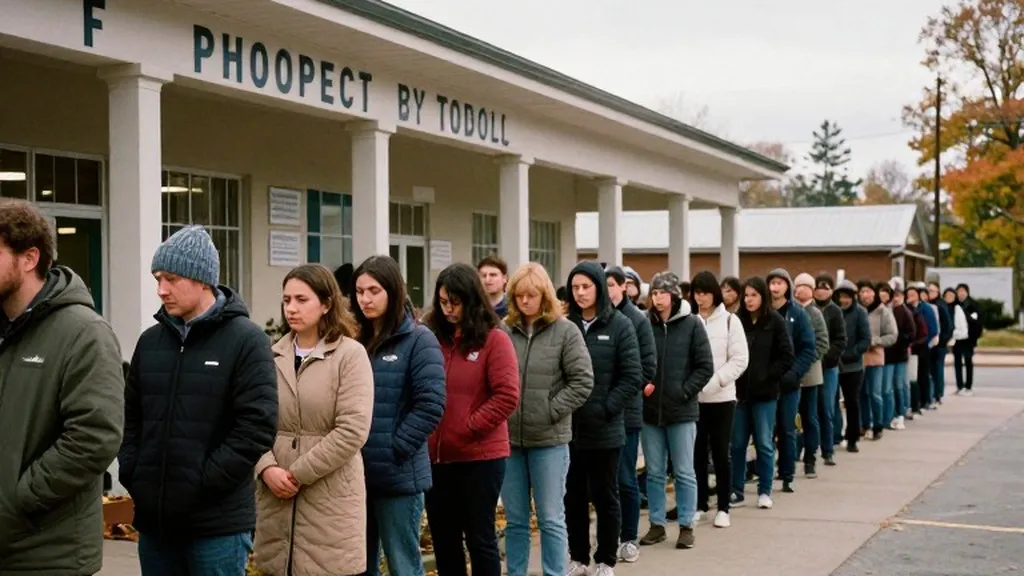
Voters in Anchorage expressed mixed feelings about the ballot clarity. Michael Hanson, a 66-year-old Republican who voted for Sullivan, said he was unhappy the matter reached the courts and preferred the decision rest with voters. Barbara Konrad, a moderate who also backed Sullivan, criticized the volume and tone of political ads and stated that Peltola had been "corrupted too quickly." Both agreed the ballot was clear despite the controversy over the two Dan Sullivans.
The outcome of Tuesday's elections will determine if the GOP retains control of both chambers, a position that has facilitated President Trump's agenda during the first two years of his term. Democrats have pickup opportunities in states like North Carolina and Texas, but they must also defend seats in states like Michigan. The result will shape the White House's ability to pass policy and confirm nominations for the final two years of the administration.