Herzog urges Israeli parties to seek deal or face another vote
No bloc holds a majority after last week's election, forcing the president to begin consultations this week.
By Robert Marshall ·

Israeli President Isaac Herzog asked political leaders to negotiate with an open heart as the country faces a fragmented parliament.
Last week's elections left the political landscape without a clear winner. Prime Minister Benjamin Netanyahu's bloc secured 53 seats in the 120 member Knesset. Gadi Eisenkot's bloc captured 48 seats. Neither group holds the 61 seats needed for a majority.
The balance of power rests with parties representing the Arab minority, which won 19 seats. That total is nearly double their previous representation. Both Netanyahu and Eisenkot initially ruled out working with these parties before the vote. Eisenkot has since softened his stance, stating he is open to partners who accept four conditions. These include recognizing Israel as a Jewish state, accepting mandatory military service for all citizens, and designating Hamas as a terrorist organization.
Netanyahu has maintained a harder line. On Sunday, he declared it forbidden to form a government with Mansour Abbas, the head of the Ra'am party. Netanyahu cited an old Ra'am platform calling for a Palestinian state with East Jerusalem as its capital and the evacuation of settlements. He also posted AI generated videos during the campaign depicting Eisenkot on a Trojan horse with Abbas and Yair Golan inside.
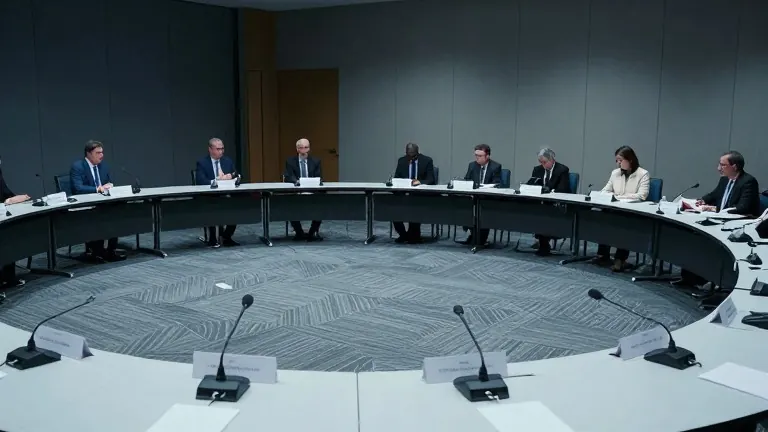
Herzog holds the formal power to decide which leader gets the first attempt at forming a cabinet. He will meet with party officials on Wednesday to begin the process. The president emphasized that the election results are a fact that leaders must accept. He urged representatives to stop climbing to lofty positions and find creative solutions to prevent a new round of voting.
Netanyahu, who will remain a caretaker prime minister, claimed without evidence that Arab parties used foreign backing to steal the election. The Shin Bet intelligence agency confirmed it is investigating possible foreign interference but said the probe does not cast aspersions on specific groups. Arab party leaders have strongly denied any wrongdoing. Abbas said Friday that he is coordinating with other Arab leaders on the prospects for replacing the current government.
Experts are divided on the outcome. Fawaz Gerges of the London School of Economics described the situation as a deadlock, arguing that Eisenkot's conditions ask Arab parties to forsake their identity. Yossi Mekelberg of Chatham House suggested that post election flexibility could allow for a breakthrough, noting that parties often break pre election promises to form a government.